Abstract · This article provides a detailed examination of Calcium Chloride 85% Powder, covering its chemical properties, industrial applications, and operational considerations. Key areas of focus include deicing performance, dust suppression mechanisms, concrete acceleration, and the material's behavior as a desiccant. The discussion draws on established industry data and technical references.
01. Chemical Identity and Purity Profile
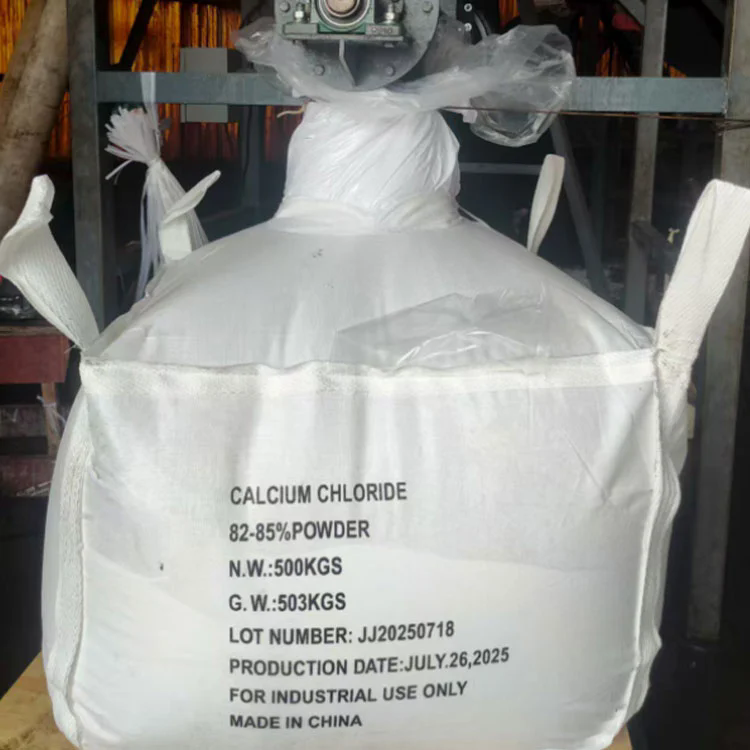
Calcium Chloride 85% Powder is a purified inorganic salt with the chemical formula CaCl₂. The 85% purity grade is widely recognized as a high-performance formulation suitable for demanding industrial and environmental applications. According to technical data sheets, this grade typically contains 83–85% calcium chloride by weight, with remaining mass consisting of trace water and minor impurities [citation:3].
The CAS registry number for calcium chloride is 10043-52-4. The 85% powder form is distinguished from lower-concentration flakes or pellets by its higher active content, which translates to greater efficiency per unit weight. Products meeting this specification are often certified under ASTM D98 and AASHTO M144 standards, ensuring quality and consistency for critical applications such as deicing and dust control [citation:6].
10043-52-4
CaCl₂
83% – 85%
02. Physical and Hygroscopic Characteristics
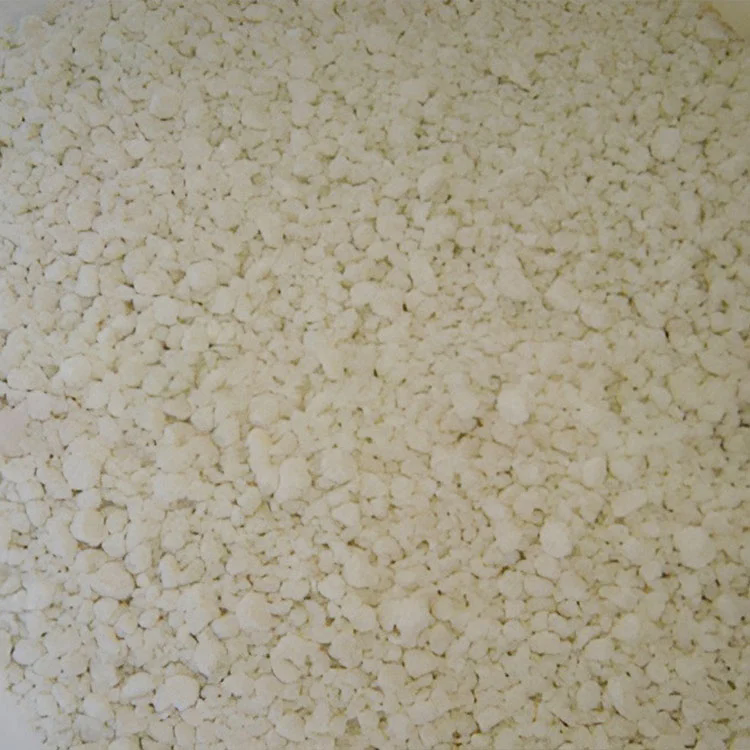
White to off-white free-flowing powder
Highly soluble in water (approx. 75 g/100 ml at 25 °C) [citation:4]
Strong moisture absorption; can absorb up to several times its weight in water
Dissolution is exothermic; significant temperature rise when mixed with water [citation:3]
The hygroscopicity of this compound is a defining characteristic. It readily absorbs moisture from the atmosphere, which makes it useful as a desiccant but also requires careful storage in sealed containers. When dissolved in water, the exothermic reaction can generate significant heat, a property that underpins its rapid ice-melting action at low temperatures [citation:5].
03. Deicing and Anti-Icing Performance
The deicing effectiveness of Calcium Chloride 85% Powder is well documented. It is capable of melting ice and snow at temperatures as low as -32 °C (-26 °F), significantly outperforming rock salt (sodium chloride), which loses effectiveness around -9 °C [citation:3][citation:6].
- Rapid melting action due to exothermic dissolution heat release.
- Lower application rates compared to conventional 77–80% flake products [citation:6].
- Effective on roads, sidewalks, parking lots, and airport runways.
- Can be blended with sand or gravel to improve traction and performance [citation:3].
Operational Note: For best results, apply to surfaces that have been cleared of loose snow. The recommended application rate ranges from 0.07 to 0.14 kg/m² on concrete or asphalt surfaces designed for freeze-thaw exposure [citation:3].
04. Dust Suppression on Unpaved Surfaces
Calcium chloride is widely used for dust control on unpaved roads, construction sites, and mining access routes. Its hygroscopic nature causes it to absorb moisture from the air, keeping road surfaces damp and binding fine particles together to reduce airborne dust [citation:8].
- Effective across a wide range of climatic conditions.
- Typical application rate: 0.5 to 0.7 kg/m², depending on surface conditions [citation:3].
- Best applied after light rainfall or with surface watering for initial activation.
- Provides extended dust suppression compared to water spraying alone.
This property makes calcium chloride a cost-effective and environmentally practical solution for managing dust emissions at industrial sites and remote infrastructure projects.
05. Role in Concrete and Construction
In the construction industry, Calcium Chloride 85% Powder is used as an accelerating admixture in concrete. It promotes faster hydration of cement, enabling earlier setting times and increased early-age strength development. This is particularly valuable in cold-weather concreting, where low temperatures would otherwise slow down curing processes [citation:5].
| Application | Benefit | Typical Dosage |
|---|---|---|
| Cold-weather concreting | Accelerates setting; reduces risk of freezing | 0.5% – 2% by weight of cement |
| Shotcrete and repair mortar | Faster strength gain; reduced curing time | Varies by formulation |
| Precast concrete products | Improved early strength for demoulding | 1% – 2% by weight of cement |
Caution: The use of chloride-containing admixtures is generally not recommended in reinforced or prestressed concrete due to the risk of corrosion to embedded steel. This restriction is enforced by most building codes and material standards [citation:3].
06. Industrial and Chemical Process Uses
Beyond deicing and construction, Calcium Chloride 85% Powder serves a broad range of industrial functions:
Desiccant and Drying Agent
- Used to dry gases such as nitrogen, oxygen, and hydrogen chloride in chemical processes [citation:5].
- Effective as a dehydration agent in the production of alcohols, esters, and acrylic resins.
Refrigeration and Brine Systems
- Calcium chloride brines are used as cooling media in refrigeration plants and ice-making equipment due to their low freezing point and high heat capacity [citation:7].
- Also applied as a liquid ballast in tires for enhanced traction in agricultural and industrial vehicles [citation:3].
Water Treatment and Chemical Processing
- Utilized as a flocculation agent in algae harvesting and bean processing [citation:5].
- Acts as a precipitant in the production of lake paints and as a calcium source in various chemical syntheses.
Frequently Asked Questions
Product specifications may vary. Always consult the manufacturer's technical data sheet for your specific application.